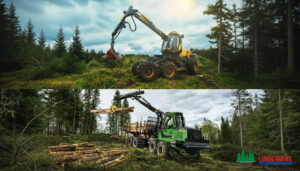
The forestry industry plays a significant role in the global economy, providing raw materials for various industries, such as construction, paper, and furniture. The industry relies heavily on heavy forestry equipment to carry out tasks such as tree planting, harvesting, transportation, and vegetation management. Heavy forestry equipment is essential in the modern forestry industry, and its use has been on the rise over the years. From logging trucks to mulchers and grinders, each machine plays a crucial role in the harvesting and management of timber. In this article, we will explore the most utilized forestry equipment, their applications, and features. We will also discuss the emerging trends and innovations in the field and their potential impact on the future of the forestry industry.
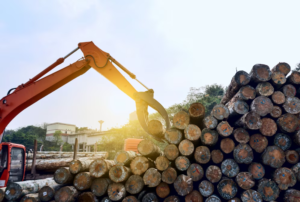
Understanding Heavy Forestry Equipment
Heavy forestry equipment refers to machinery that is specifically designed and manufactured to carry out tasks in the forest industry. It is an essential tool in the modern forestry industry, and its use has been on the rise over the years. Heavy forestry equipment is used for various tasks, such as tree planting, harvesting, transportation, and vegetation management.
Tree Planting
Tree planting is a critical task in the forestry industry, and it requires specialized equipment such as tree planters and seed drills. These machines are designed to plant trees in large numbers quickly and efficiently.
Harvesting
Harvesting is another essential task in the forestry industry, and it involves the cutting and removal of trees from the forest. Heavy forestry equipment used for harvesting includes harvesters and feller bunchers, which are equipped with advanced features and technologies that enhance their precision and productivity.
Transportation
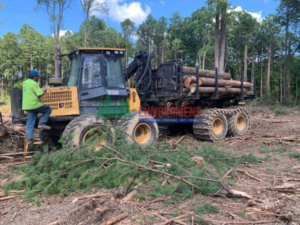
Transportation is also a crucial task in the forestry industry, and it involves the movement of logs from the forest to the processing mill. Heavy forestry equipment used for transportation includes logging trucks, skidders, and forwarders, which are designed to navigate through rugged terrain and rough roads.
Vegetation management
Vegetation management is another task that requires heavy forestry equipment. It involves the removal of unwanted vegetation, such as brush and weeds, and the preparation of land for planting or other uses. Heavy forestry equipment used for vegetation management includes mulchers and grinders, which are equipped with powerful engines and cutting tools that can handle the toughest vegetation and debris.
The Backbone: Logging Trucks
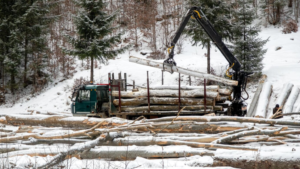
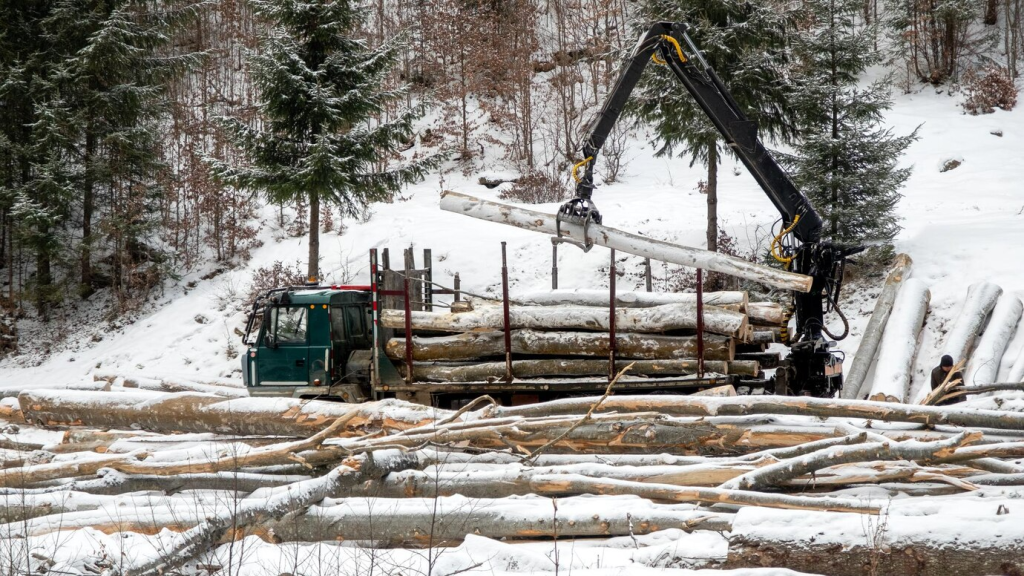
Logging trucks play a crucial role in the forestry industry, serving as the primary mode of transporting logs from the forest to the processing mill. These trucks come in different sizes and configurations, each designed to meet specific transportation needs. Some are designed for off-highway use in rugged terrain, while others are designed for highway use on paved roads.
Logging trucks are equipped with powerful engines and chassis systems that enable them to navigate through rough terrain and transport logs of various lengths and diameters. They also have advanced features such as GPS and telematics that help monitor the location and performance of the truck in real time. Safety features such as roll cages, safety belts, and airbags are also included to protect the driver in case of an accident.
Power Players: Forestry Tractors
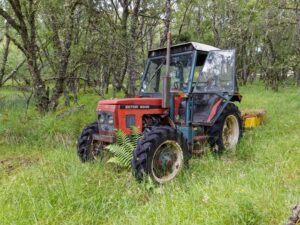
Forestry tractors are versatile and powerful machines used in forestry operations. They come in different types and models, including wheeled and tracked, and are equipped with various attachments such as harvester heads and felling attachments. Forestry tractors are used for a range of tasks, including tree planting, thinning, and harvesting.
Forestry tractors are designed to operate in rugged terrain and harsh weather conditions. They are equipped with advanced suspension systems and powerful engines, which enable them to move through rough terrain and carry out tasks efficiently. They also have various applications, such as tree planting, thinning, and harvesting.
Mighty Machines: Harvesters and Feller Bunchers
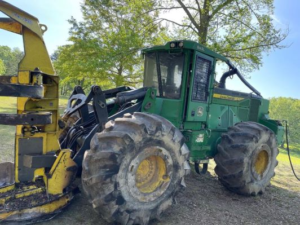
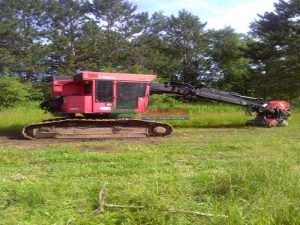
Harvesters and feller bunchers are heavy machines used in the harvesting of timber. Harvesters are equipped with harvesting heads that can fell, delimb, and buck trees in one pass. Feller bunchers are used to cut and hold multiple trees at once, increasing the speed and efficiency of the harvesting process.
Both harvesters and feller bunchers are equipped with advanced features and technologies, such as GPS and computerized controls, that enhance their precision and productivity. They are designed to operate in rugged terrain and can handle trees of various sizes and shapes.
Lifting the Load: Skidders and Forwarders

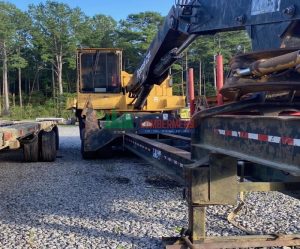
Skidders and forwarders are machines used in the extraction and transportation of logs from the forest to the processing mill. Skidders are used to extract logs from the forest and transport them to a landing area, while forwarders are used to transport logs from the landing area to the processing mill. Both machines are designed to operate in rugged terrain and are equipped with powerful engines and hydraulic systems that enable them to navigate through rough terrain and steep slopes.
Skidders and forwarders come in different sizes and configurations, such as wheeled or tracked, and can transport logs of various lengths and diameters. They are also equipped with advanced features, such as GPS and telematics, that help monitor the location and performance of the machine in real time.
Breaking Ground: Mulchers and Grinders
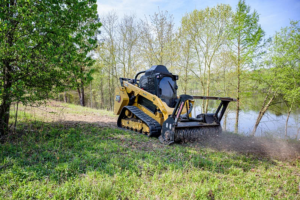
Mulchers and grinders are machines used in vegetation management and land preparation. Mulchers are used to shred and clear vegetation, while grinders are used to grind stumps and woody debris. They come in different configurations and capabilities, such as tracked or wheeled, and are equipped with powerful engines and cutting tools that can handle the toughest vegetation and debris.
Mulchers and grinders are designed to operate in rugged terrain and can handle various types of vegetation, such as brush, weeds, and trees. They are also equipped with safety features, such as safety shields and emergency stop buttons, to protect the operator.
Future Trends and Innovations
The forestry industry has always been an essential part of human civilization, and its importance has only increased over the years. With the growing demand for wood and paper products, the forestry industry is constantly evolving, and new technologies and innovations are emerging to meet the demand.
One of the most significant trends in the industry is the use of drones for mapping and monitoring forest resources. Drones equipped with advanced sensors and cameras can provide detailed and accurate data about forest health, growth rates, and species distribution. This information can help forestry companies make better management decisions and reduce the impact of logging on the environment.
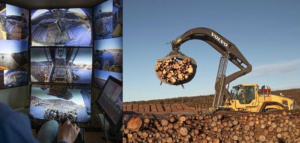
Another significant trend in the forestry industry is the development of autonomous machines that can operate without human intervention. These machines can perform a range of tasks, from planting trees to harvesting timber, making the forestry industry more efficient and cost-effective. Autonomous machines can also reduce the risk of accidents and injuries, making the workplace safer for forestry workers.
Additionally, the use of alternative fuels, such as biofuels and electric power, is gaining popularity in the industry. These fuels are cleaner and more sustainable than traditional fossil fuels, reducing the impact of the forestry industry on the environment. As the technology continues to evolve, the forestry industry is poised for a significant transformation, making it more efficient, sustainable, and eco-friendly than ever before.
Conclusion
The forestry industry has come a long way in recent years, and the use of heavy equipment has played a vital role in its growth. Logging trucks, mulchers, and grinders are just a few examples of the machinery that has become essential to the harvesting and management of timber. Looking ahead, advancements in technology and innovation are set to revolutionize the field even further, promising greater efficiency and sustainability. To remain competitive in this ever-evolving industry, it is crucial to stay updated on the latest trends and developments and invest in the best forestry equipment available.