Sawmill Safety Tips Every Operator Should Know
Ask anyone who’s worked around a sawmill for a while, and they’ll tell you the same thing: the machines don’t forgive a moment of carelessness. A blade doesn’t care if you’re in a hurry. A rolling log doesn’t wait for you to notice it. Sawmill safety isn’t a box to check once and forget — it’s a daily habit that separates operators who last decades from operators who get hurt in their first year.
Maybe you just started operating, and you’re wondering what you actually need to worry about. Maybe you’re running a crew and trying to build habits that stick. Either way, this guide follows the same order those questions usually come in: why this matters, what to check before you start, what to watch for while you’re working, what to do if something still goes wrong, and how to build safety into the way your whole operation runs — not just your own shift.
Why Sawmill Safety Deserves Real Attention
Working in a sawmill is one of the more dangerous jobs in the country. Massive log weights, fast-moving blades, and machinery that doesn’t stop the instant something goes wrong all add up (OSHA). Common injuries include lacerations, amputations, and severed fingers, along with respiratory and skin problems from wood dust exposure.
The data backs this up in specific ways. A study of workers’ compensation claims in Ohio’s wood product manufacturing sector found that among saw-related lost-time injuries, fractures accounted for roughly 36% of cases, open wounds around 30%, and amputations close to 15% (NIOSH-supported analysis, PMC). Those aren’t rare, freak-accident numbers. They’re a pattern — and patterns can be prevented.
That’s really the point of lumber mill safety planning. Most incidents aren’t caused by one dramatic failure. They’re caused by small habits: a guard left off “just for this cut,” a fatigued operator skipping a lockout step, sawdust left to pile up in a corner nobody thinks about until it ignites.
So what exactly are those small habits protecting against? It helps to name the hazards specifically before getting into what to do about them.
Understanding the Biggest Sawmill Hazards
Blade contact and kickback. This is the hazard most people picture first, and for good reason. Loose material, improperly secured logs, or dull blades all increase the risk of kickback — where the workpiece is thrown back toward the operator at high speed.
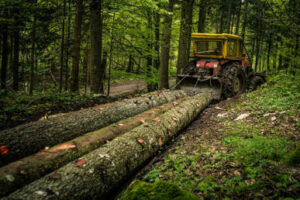
Log handling injuries. Logs are heavy, awkward, and sometimes unpredictable once they start rolling. Crush injuries and struck-by incidents during loading, decking, and positioning are among the most common causes of serious injury in sawmill work.
Entanglement. Loose clothing, hair, or gloves caught in moving parts — belts, chains, rollers — can cause severe injury in seconds. This is one of the reasons proper machine guarding matters as much as it does.
Combustible dust. Sawdust isn’t just a housekeeping issue. Under the right conditions, it’s a fire and explosion hazard, and it’s one that catches operators off guard because it builds up gradually.
Noise and repetitive strain. Less dramatic than a blade injury, but real over time. Long-term hearing loss and musculoskeletal strain are common in operators who skip hearing protection or work awkward, repetitive positions for years.
With those hazards in mind, the natural next question is practical: what do you actually do before the first log of the day even touches the blade?
Pre-Operation Equipment Checks
A safe shift starts before the first log ever touches the blade. Build a short, consistent pre-operation check into your routine and stick to it, even on busy days.
At minimum, check the following before starting up:
- Blade condition and tension — a dull or damaged blade is a kickback risk, not just a quality problem
- Guards and safety shields, confirming they’re in place and undamaged
- Hydraulic lines and fittings for leaks or visible wear
- Emergency stop function, tested at the start of each shift
- Log clamps and carriage components for looseness or play
💡 Pro Tip Inspect your emergency stop before every shift — not just when something feels off. It’s the one control you need to work instantly, every time.
This matters just as much when you’re buying used equipment as it does during daily operation. If you’re evaluating a machine before purchase, it’s worth applying the same discipline — our guide on inspecting a used sawmill before you buy walks through what to look for so you’re not inheriting someone else’s safety problem along with the machine.
Once the machine itself checks out, the next thing standing between you and an injury is what you’re wearing.
Personal Protective Equipment (PPE)
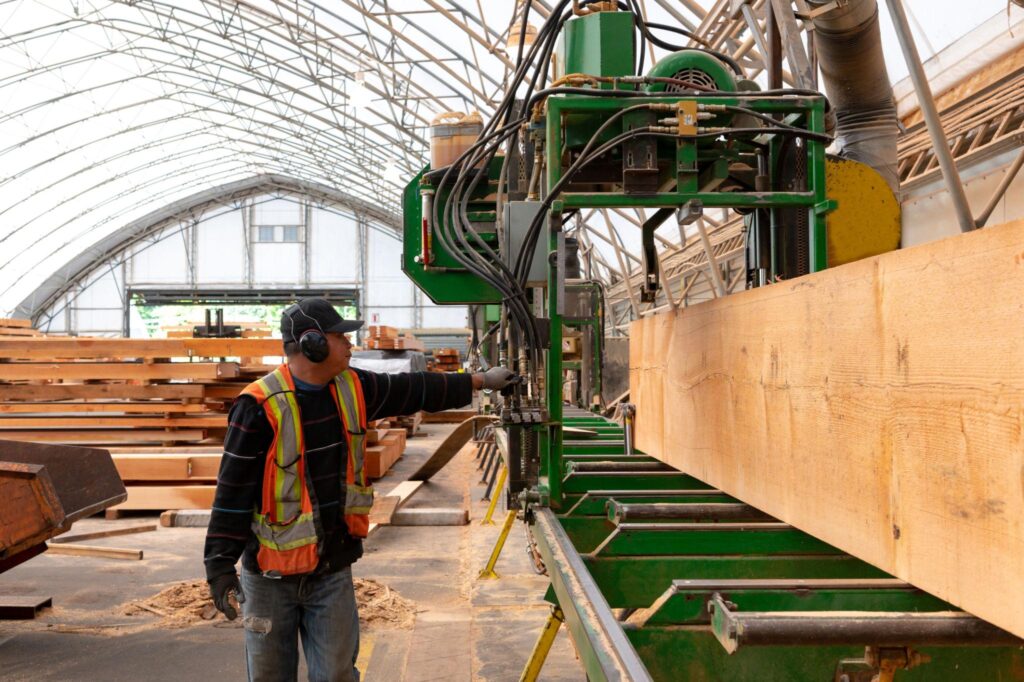
PPE won’t prevent every hazard, but it’s the last line of defense when something goes wrong, and it’s non-negotiable in most sawmill settings.
The basics that belong on every operator, every shift:
- Eye protection — flying chips and debris are a constant risk around any active saw
- Hearing protection — sawmill noise levels routinely exceed safe long-term exposure thresholds
- Respiratory protection — especially important in enclosed areas or during heavy dust conditions
- Cut-resistant gloves — for log handling and material movement, not for use near an active blade
- Steel-toed boots — logs and lumber are heavy, and feet are a common injury point
⚠️ Safety Reminder Owning PPE isn’t the same as using it. Make it part of the pre-shift routine, not an afterthought reached for only when a hazard already feels obvious.
One pattern worth noting: a study of small-scale sawmill workers found that only about 41% reported consistently using PPE, even though most injuries in the same group involved exactly the body parts PPE is designed to protect. Consistency, not just ownership of the gear, is what actually prevents injuries.
Equipment checked, PPE on — now the actual work starts. And for most sawmills, the single riskiest part of the day isn’t the blade at all. It’s the logs.
Safe Log Handling Practices
Log handling causes more injuries than most new operators expect, mostly because it doesn’t feel as obviously dangerous as the blade does.
A few practices make a real difference:
- Never position yourself in the path a log could roll if a chain or clamp fails
- Use mechanical handling — loaders, grapples, conveyors — wherever possible instead of manual repositioning
- Keep the log deck area clear of tripping hazards, since footing matters as much as the log itself
- Communicate clearly with anyone else on-site before moving a log, using a consistent signal or call-out
If you’re staffing more than one person on log handling, a short verbal check before every lift or repositioning — “clear,” “moving,” “set” — sounds simple, but it eliminates a huge share of struck-by incidents that happen when two people assume the other has it handled.
Once the log actually reaches the blade, a different set of risks takes over — and this is where guarding and lockout procedures matter most.
Machine Guarding and Lockout/Tagout
Guards exist because human reaction time isn’t fast enough to beat a moving blade. Removing a guard “just for a minute” is one of the most common ways experienced operators get hurt — not beginners, experienced people who’ve done the cut a thousand times before.
A few non-negotiables:
- Never operate equipment with a guard removed, propped open, or bypassed
- Follow a written lockout/tagout procedure any time you’re clearing a jam, changing a blade, or performing maintenance
- Confirm stored energy — hydraulic pressure, spring tension — is fully released before working on a machine
- Train every operator on lockout/tagout specifically, not just general safety orientation
⚠️ Safety Reminder Never remove blade guards while the machine is running. If a guard is in the way of a specific cut, stop the machine and address it properly — don’t work around it live.
This is also where equipment condition and safety start to overlap directly. A well-maintained machine with intact guarding and a properly functioning emergency stop gives you a real safety margin. An older, poorly serviced unit with a sticky guard or a delayed e-stop response doesn’t — no matter how careful the operator is.
So far, everything covered is a hazard you can see. The next one builds up quietly enough that most operators underestimate it until it’s already a problem.
Sawdust, Fire, and Combustible Dust Hazards
Sawdust looks harmless. In the right concentration, suspended in the air with an ignition source nearby, it isn’t. The National Fire Protection Association addresses this directly through NFPA 664, the standard covering fire and explosion prevention in wood processing and woodworking facilities, which sets specific limits on how much dust accumulation is considered a hazard on upward-facing surfaces.
Practical steps that reduce the risk:
- Clean dust accumulation regularly, not just when it becomes visually obvious
- Keep dust collection systems maintained and functioning as designed
- Use properly rated electrical equipment in areas where dust is present, since a standard spark-producing fixture can be an ignition source
- Address hot work — welding, grinding, cutting — as a separate, controlled activity with dust hazards accounted for beforehand
⚠️ Safety Reminder Sawdust buildup that looks like routine mess is exactly how combustible dust hazards start. Clean it on a schedule, not just when it’s visibly out of hand.
Fire risk in a sawmill isn’t limited to dust. Dry sawdust piles, fuel storage, and hot equipment surfaces all deserve their own attention in a written fire safety plan — but dust is the hazard most operators underestimate, because it builds up slowly enough to become part of the background.
None of the hazards above stay constant, either. The same task can carry different risk depending on what the weather’s doing that day.
Seasonal and Weather-Related Safety Considerations
Sawmill hazards shift with the seasons, and it’s easy to plan safety around a single “normal” day instead of the conditions that actually show up throughout the year.
Cold weather brings stiffer hydraulic response, numb hands that fumble controls, and ice on walking surfaces around the log deck. Slow down startup procedures on cold mornings and give equipment time to reach normal operating temperature before pushing full loads.
Hot weather raises the risk of heat illness, especially for operators doing physical log handling outdoors for a full shift. Build in shade, water, and rest breaks as a standard part of summer operations, not an afterthought.
Wet conditions make footing around the log deck and mill area noticeably worse, and wet logs are heavier and more prone to slipping out of clamps or chains than dry ones. A rain-soaked morning is exactly when handling incidents spike.
None of these require a different safety program — just an honest adjustment to the one you already have, based on the conditions in front of you that day.
Even with every precaution covered so far, injuries still happen. The difference between a scare and a serious outcome often comes down to what happens in the first few minutes after.
Emergency Response and First Aid Readiness
Even a well-run mill needs a plan for the day something still goes wrong. Prevention reduces the odds of an injury, but it doesn’t get you to zero — and how fast a team responds in the first few minutes often determines how serious the outcome is.
A basic emergency response setup includes:
- A stocked first aid kit rated for the injuries most likely on-site — cuts, punctures, and crush injuries, not just minor scrapes
- A clearly posted emergency shutdown procedure that anyone on the crew can execute, not just the most experienced operator
- Cell service or radio contact confirmed for the actual work site, since remote log yards sometimes have dead zones
- At least one person on every shift trained in basic first aid and CPR
- A posted address or GPS coordinates for the site, since rural mill locations can be hard for emergency responders to find quickly
Run through this plan out loud once in a while, not just when you write it down. A team that’s talked through “what do we do if someone’s hand gets caught” responds faster than a team seeing that scenario for the first time during the actual emergency.
Everything up to this point is about a single shift. If you’re running the operation rather than just working a shift in it, the real question is how any of this holds up once you’re not the one standing at the mill.
Training and Written Safety Programs
Verbal instructions fade. A written safety program doesn’t. Every operator — full-time employee, seasonal help, or the owner filling in for a day — should be trained on the same standard before they touch equipment.
A functional safety program typically covers:
- Machine-specific operating procedures for every piece of equipment on-site
- Lockout/tagout steps, documented and posted where relevant
- PPE requirements by task and area
- Emergency procedures, including who calls for help and how
- A process for reporting near-misses, not just injuries
Near-miss reporting is worth emphasizing on its own. Most serious injuries are preceded by smaller incidents that never got reported — a near-kickback, a guard that stuck for a second, a log that shifted more than expected. A team that reports those catches problems before they become injuries.
A written program only goes so far, though, if the machines it’s written around aren’t holding up their end.
Why Equipment Condition Is a Safety Issue
It’s easy to think about equipment purchases purely in terms of production capacity or cost. But condition is a safety variable too, and it’s one that compounds over time.
A machine with worn bearings, a delayed emergency stop, or a blade guard that’s been jury-rigged back into place isn’t just less efficient — it’s a standing risk that gets worse the longer it’s ignored. This is one of the strongest arguments for buying from sources that document condition honestly rather than guessing at what you’re getting.
If you’re shopping for a replacement or an upgrade, look for reliable sawmill equipment with a clear maintenance history rather than the cheapest listing available. For operators comparing new purchases, modern sawmill equipment generally includes updated safety features — better guarding, improved e-stop response, more reliable hydraulics — that older machines were never built with. And if budget points you toward the used market, filtering quality sawmill equipment by condition and documented service history tells you more about real-world safety risk than the asking price ever will.
Pairing a sound purchase with consistent upkeep matters just as much. Our sawmill maintenance checklist covers the recurring service items that keep a machine both productive and safe over its working life.
Good equipment and a written program still need one more thing to actually work day to day — and that’s the least tangible piece of all.
Building a Site-Wide Safety Culture
Individual habits matter, but culture is what makes those habits stick when no one’s watching. A few things separate sites with strong safety records from ones that struggle:
- Leadership visibly follows the same rules they set for everyone else
- Safety conversations happen regularly, not just after an incident
- New hires get real hands-on training, not a five-minute walkthrough
- Reporting a hazard or near-miss is treated as helpful, never as a complaint
None of this requires a large operation or a big safety budget. A two-person mill can build the same habits as a twenty-person operation — it just takes consistency.
Put all of the above together, and most safety failures trace back to a small handful of repeated mistakes. Worth checking yourself against them directly.
Common Sawmill Safety Mistakes to Avoid
A few patterns show up repeatedly, across mills of every size:
- Skipping the pre-operation check on busy days, when it matters most
- Removing or bypassing guards for a quicker cut, “just this once”
- Letting PPE compliance slide once the immediate danger doesn’t feel obvious
- Ignoring small near-misses instead of treating them as warnings
- Delaying maintenance on equipment that “still runs fine”
- Letting dust accumulation go unaddressed because it’s not an urgent-feeling task
Every one of these is preventable with a routine. None of them require expensive equipment to fix — just consistency.
Frequently Asked Questions
What is the most common cause of sawmill injuries?
Log handling and blade contact account for the largest share of serious sawmill injuries. Crush and struck-by injuries during log loading and positioning are extremely common, and saw-related incidents frequently result in fractures, open wounds, or amputations when guarding or procedures fail.
What PPE is required for sawmill work?
At minimum, eye protection, hearing protection, respiratory protection in dusty conditions, cut-resistant gloves for handling material, and steel-toed boots. Specific requirements can vary based on the task and the equipment involved, so it’s worth reviewing OSHA’s sawmill guidance for your specific operation.
How often should sawmill equipment be inspected for safety?
A basic safety and function check should happen before every shift, covering blade condition, guards, hydraulic lines, and the emergency stop. More thorough mechanical inspections should follow a regular maintenance schedule, not just a reaction to a visible problem.
Is sawdust actually a fire hazard?
Yes. Accumulated wood dust is a recognized combustible dust hazard, addressed specifically by NFPA 664. Under the right conditions — sufficient concentration in the air and an ignition source — it can cause both fire and explosion incidents, which is why regular cleaning and proper dust collection matter as much as any other safety measure on-site.
Does newer equipment make sawmill work safer?
Generally, yes. Modern machines tend to include improved guarding, faster emergency stop response, and more reliable safety systems than older, heavily worn equipment. That said, a well-maintained older machine can still be operated safely, while a poorly maintained new one can develop the same risks over time. Condition and maintenance history matter as much as age.
What should a sawmill’s emergency response plan include?
At minimum, a stocked first aid kit suited to cuts and crush injuries, a clear emergency shutdown procedure everyone on the crew knows, reliable communication for calling for help, and at least one person per shift trained in first aid and CPR. Practicing the plan out loud occasionally matters as much as writing it down.
Do seasonal conditions affect sawmill safety?
Yes. Cold weather slows hydraulic response and increases slip hazards on icy walking surfaces. Hot weather raises heat illness risk during physical log handling. Wet conditions make footing worse and logs heavier and harder to secure. Adjusting pace and precautions for the season is a normal part of a solid safety routine, not an exception to it.
Bringing It Together
Sawmill safety isn’t one big decision — it’s a series of small, repeated ones. Check the equipment before you start. Wear the PPE every time, not just when it feels necessary. Respect the guards and the lockout procedure, even when you’re confident you know the machine. Take dust seriously before it becomes a fire risk instead of after.
None of this replaces good equipment, though. A well-built, well-maintained machine gives every one of these habits a real chance to work. Combine sound equipment with consistent daily practices, and you get a sawmill that stays productive precisely because it stays safe.
For more guides like this, browse our full blog archive.
Sources
- OSHA, Sawmills – Overview
- OSHA, eTools: Sawmills – Additional References
- National Fire Protection Association, NFPA 664 – Standard for the Prevention of Fires and Explosions in Wood Processing and Woodworking Facilities
- PMC/NIOSH-supported study, Occupational Injuries in Ohio Wood Product Manufacturing