Sawmill Maintenance Checklist
Is Regular Sawmill Maintenance Worth the Time?
Absolutely.
Regular sawmill maintenance is one of the most important investments you can make in your operation. Whether you own a portable band sawmill, a hydraulic mill, or industrial sawmill equipment, consistent maintenance helps reduce costly downtime, improve cutting accuracy, and extend the life of your machine.
Many operators only think about maintenance after a breakdown occurs. Unfortunately, unexpected repairs often lead to production delays, higher repair bills, and lost revenue. A worn blade, loose bearing, leaking hydraulic hose, or dirty air filter may seem like a minor issue today, but ignoring these problems can eventually result in expensive mechanical failures.
The good news is that most breakdowns are preventable. By following a structured sawmill maintenance checklist, you can identify small problems early, keep your equipment operating efficiently, and reduce the risk of unexpected shutdowns.
In this guide, we’ll walk through the essential daily sawmill maintenance, weekly sawmill maintenance, and monthly sawmill maintenance tasks every sawmill owner should perform. Whether you’re running a small custom milling business or managing a high-production lumber operation, these practical maintenance tips will help protect your investment and keep your sawmill performing at its best.
Why Preventive Sawmill Maintenance Matters
Every sawmill works in a demanding environment. Heavy logs, continuous vibration, sawdust, moisture, and long operating hours place constant stress on critical components. Over time, even the highest-quality machines experience normal wear.
That’s why preventive sawmill maintenance is so important.
Instead of waiting for equipment to fail, preventive maintenance focuses on routine inspections, cleaning, lubrication, and replacing worn parts before they cause larger mechanical problems. This proactive approach not only reduces repair costs but also helps improve productivity and workplace safety.
A well-maintained sawmill is more likely to produce accurate cuts, operate efficiently, and experience fewer unexpected interruptions. In contrast, neglecting routine maintenance often leads to increased downtime, inconsistent lumber quality, and higher operating expenses.
Whether your sawmill is used every day or only during busy seasons, following a consistent maintenance schedule is one of the most effective ways to maximize equipment performance over the long term.
Benefits of Following a Sawmill Maintenance Checklist
Creating a consistent sawmill maintenance checklist helps ensure that no critical inspection is overlooked. Rather than relying on memory, operators can follow a repeatable process that keeps every major component in good working condition.
Some of the biggest benefits include:
Reduce Unexpected Downtime
Routine inspections allow you to identify worn parts before they fail, helping you avoid costly interruptions during production.
Extend Equipment Life
Proper lubrication, regular cleaning, and timely replacement of worn components reduce unnecessary wear on engines, hydraulics, bearings, and blade systems.
Improve Lumber Quality
Sharp blades, properly adjusted guides, and correctly aligned equipment produce cleaner cuts with greater dimensional accuracy, reducing waste and rework.
Lower Long-Term Operating Costs
Preventive maintenance is usually far less expensive than major repairs or emergency component replacements.
Improve Workplace Safety
Routine inspections help identify loose hardware, damaged guards, hydraulic leaks, and electrical issues before they create hazards for operators.
Understanding Your Sawmill Before Creating a Maintenance Plan
Not every sawmill requires the same maintenance routine. Portable band sawmills, hydraulic mills, and industrial production systems all have different designs, operating capacities, and service requirements. Understanding how your equipment works makes it easier to prioritize inspections and perform maintenance at the right intervals.
If you’re still learning about different sawmill types or comparing equipment before investing in a machine, our Complete Guide to Sawmill Equipment provides a detailed overview of portable, hydraulic, and industrial sawmills, along with the essential components that keep them operating efficiently.
Daily Sawmill Maintenance Checklist
Daily inspections typically take less than 30 minutes, but they can prevent many of the most common equipment failures. Completing these simple tasks before starting production helps improve reliability, protect expensive components, and reduce unplanned downtime.
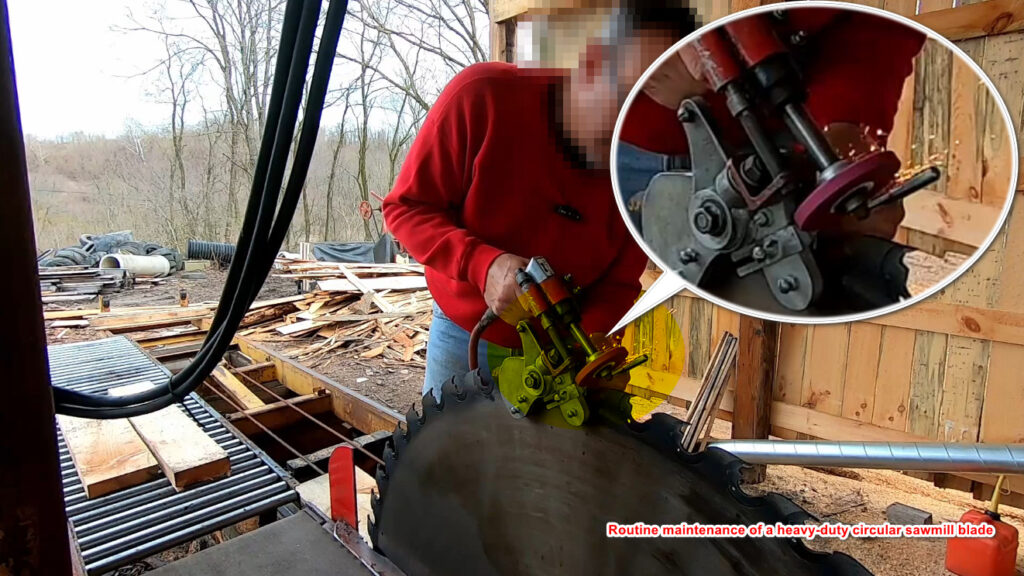
✓ Inspect the Saw Blade
The saw blade does the hardest work in any milling operation, making it one of the first components that should be inspected each day.
Look for:
- Cracked or missing teeth
- Dull cutting edges
- Blade tension
- Proper blade tracking
- Resin or pitch buildup
- Signs of overheating
A sharp, properly aligned blade produces smoother cuts while reducing stress on bearings, guide rollers, and drive components.
✓ Check Engine Oil and Fluid Levels
Before starting the engine, inspect all essential fluids, including:
- Engine oil
- Hydraulic fluid
- Coolant (if applicable)
- Fuel level
- Lubrication reservoirs
Low or contaminated fluids can lead to overheating, excessive wear, and costly repairs.
✓ Inspect the Hydraulic System
Hydraulic components handle much of the heavy lifting on modern sawmills.
Check for:
- Hydraulic hose damage
- Fluid leaks
- Loose fittings
- Slow cylinder movement
- Damaged seals
Repairing a small leak early is significantly less expensive than replacing a failed hydraulic pump or cylinder.
✓ Remove Sawdust and Debris
Wood dust, bark, and debris accumulate quickly around moving parts and cooling systems.
Pay special attention to:
- Blade housing
- Rails
- Engine compartment
- Cooling fins
- Hydraulic components
- Rollers
Keeping the machine clean improves airflow, reduces overheating, and lowers the risk of fire.
✓ Inspect Belts, Chains, and Pulleys
Power transmission components should be inspected daily for:
- Cracks
- Fraying
- Loose tension
- Rust
- Uneven wear
Replacing worn belts before failure helps avoid unexpected production delays.
✓ Test Safety Features
Never begin milling without verifying that all safety systems operate correctly.
Check:
- Emergency stop button
- Blade guards
- Safety switches
- Control levers
- Warning labels
A few minutes spent checking safety equipment can help prevent serious workplace injuries.
Daily Sawmill Maintenance Checklist (Quick Reference)
| Task | Complete |
|---|---|
| Inspect saw blade | ☐ |
| Check engine oil | ☐ |
| Inspect hydraulic system | ☐ |
| Clean sawdust and debris | ☐ |
| Inspect belts and pulleys | ☐ |
| Check blade tracking | ☐ |
| Inspect guide rollers | ☐ |
| Test emergency stop | ☐ |
| Check safety guards | ☐ |
| Inspect electrical connections | ☐ |
📷 Image Suggestions
Weekly Sawmill Maintenance Checklist
Daily inspections help identify obvious problems, but weekly sawmill maintenance focuses on the components that experience continuous wear during production. Setting aside time each week for a more detailed inspection can improve cutting performance, reduce unexpected downtime, and help prevent expensive repairs.
✓ Inspect Blade Guides and Bearings
Blade guides and bearings play a critical role in keeping the saw blade stable during every cut. As these components wear, vibration increases, blade tracking becomes less accurate, and lumber quality may decline.
During your weekly inspection:
- Check bearings for smooth rotation.
- Look for excessive wear on guide rollers.
- Tighten loose mounting hardware.
- Replace worn bearings before they fail.
Maintaining these components improves blade stability and helps extend blade life.
✓ Check Blade Tracking and Alignment
Even the sharpest blade cannot produce accurate lumber if it is misaligned.
Inspect the sawmill to ensure:
- The blade tracks correctly on both wheels.
- Guide rollers are properly adjusted.
- Blade tension meets the manufacturer’s recommendations.
- There is minimal vibration during operation.
Proper alignment reduces unnecessary stress on the blade and helps improve dimensional accuracy.
✓ Lubricate Moving Components
Lubrication is one of the simplest yet most important maintenance tasks.
Apply the recommended lubricant to:
- Bearings
- Pivot points
- Chains
- Roller assemblies
- Sliding mechanisms
- Hydraulic linkage points
Using the correct lubricant helps reduce friction, minimize wear, and improve the overall lifespan of your sawmill equipment.
✓ Inspect Belts, Chains, and Drive Components
Power transmission components wear gradually over time.
Look for:
- Cracked belts
- Loose belt tension
- Rust on chains
- Damaged sprockets
- Excessive wear on pulleys
Replacing inexpensive components before they fail helps avoid costly production delays.
✓ Tighten Bolts and Fasteners
Continuous vibration naturally loosens bolts throughout a sawmill.
Inspect:
- Blade housing
- Wheel assemblies
- Engine mounts
- Hydraulic brackets
- Safety guards
- Operator platform
A quick inspection each week can prevent larger mechanical problems later.
✓ Clean Cooling Systems
Sawdust and debris often collect around cooling components.
Inspect and clean:
- Radiator (if equipped)
- Engine cooling fins
- Air intake screens
- Cooling fans
Maintaining proper airflow helps prevent overheating during long production days.
Monthly Sawmill Maintenance Checklist
While daily and weekly inspections focus on routine wear, monthly sawmill maintenance provides an opportunity to inspect the larger systems that keep your operation running efficiently.
These inspections often require more time, but they can significantly extend the life of your equipment.
✓ Perform a Complete Hydraulic System Inspection
Hydraulic systems handle log loading, clamping, and many other heavy-duty functions.
Inspect:
- Hydraulic hoses
- Cylinders
- Pumps
- Valves
- Hydraulic fluid condition
- Hose fittings
Even a small hydraulic leak can reduce system performance and eventually lead to expensive repairs.
✓ Inspect the Electrical System
Electrical issues often begin with something as simple as a loose connection.
Check:
- Battery terminals
- Wiring harnesses
- Switches
- Control panels
- Fuses
- Relays
Replacing damaged wiring early helps prevent unexpected shutdowns.
✓ Inspect Rails and Track Alignment
The rail system directly affects cutting accuracy.
Inspect for:
- Loose fasteners
- Dirt buildup
- Bent rails
- Uneven wear
- Alignment issues
Keeping rails clean and properly aligned improves both productivity and lumber quality.
✓ Service the Engine
A reliable engine is essential for consistent production.
Follow the manufacturer’s maintenance schedule for:
- Oil changes
- Oil filter replacement
- Fuel filter inspection
- Air filter cleaning or replacement
- Coolant inspection
- Battery maintenance
Routine engine servicing improves fuel efficiency and reduces the risk of unexpected failures.
✓ Inspect Wheels and Trailer Components (Portable Mills)
If your sawmill is transported between job sites, inspect:
- Tire pressure
- Wheel bearings
- Lug nuts
- Trailer lights
- Suspension
- Safety chains
Safe transportation is just as important as safe operation.
When Maintenance Isn’t Enough
Routine maintenance can dramatically extend the life of any sawmill, but every machine eventually reaches a point where repairs become more expensive than replacement. Older equipment may require frequent servicing, experience reduced production efficiency, or become difficult to repair due to worn components and discontinued parts.
If you’re evaluating whether it’s time to upgrade, explore our selection of sawmill equipment to compare portable band sawmills, hydraulic models, and industrial systems from trusted sellers across North America. Investing in the right machine can improve productivity, reduce downtime, and lower long-term operating costs.
For businesses looking to control upfront expenses, purchasing quality used sawmill equipment is often a practical solution. A well-maintained pre-owned sawmill can deliver dependable performance for years while costing significantly less than buying new equipment.
Common Sawmill Maintenance Mistakes
Even experienced operators sometimes overlook simple maintenance tasks that later become expensive repairs.
Avoid these common mistakes:
- Skipping daily inspections
- Running dull or damaged blades
- Ignoring hydraulic leaks
- Forgetting lubrication schedules
- Allowing excessive sawdust buildup
- Delaying replacement of worn bearings and belts
- Failing to keep maintenance records
Small problems rarely stay small in a busy sawmill. Addressing them early saves both time and money.
If you’re planning to purchase a pre-owned machine, don’t rely on appearance alone. Our guide, What to Inspect Before Buying Used Sawmill Equipment, explains the critical components every buyer should evaluate before making an investment, helping you avoid costly surprises and choose equipment with confidence.
📷 Image Suggestions
Sawmill Maintenance Schedule at a Glance
Creating a maintenance calendar helps ensure that important inspections are completed on time instead of being forgotten during busy production periods. While every manufacturer provides its own service recommendations, the schedule below is a practical starting point for most portable, hydraulic, and industrial sawmills.
| Maintenance Task | Daily | Weekly | Monthly |
|---|---|---|---|
| Inspect saw blade | ✓ | ||
| Check engine oil & fluids | ✓ | ||
| Clean sawdust & debris | ✓ | ||
| Inspect hydraulic leaks | ✓ | ||
| Check blade guides & bearings | ✓ | ||
| Lubricate moving components | ✓ | ||
| Inspect belts & chains | ✓ | ||
| Tighten bolts & fasteners | ✓ | ||
| Inspect electrical system | ✓ | ||
| Check rail alignment | ✓ | ||
| Complete hydraulic inspection | ✓ | ||
| Engine service & filter replacement | ✓ |
Tip: If your sawmill operates every day or processes high volumes of timber, some weekly inspections may need to be performed more frequently.
When Should You Repair or Replace Your Sawmill?
Routine maintenance can significantly extend the lifespan of a sawmill, but no machine lasts forever. As equipment ages, repair costs may begin to outweigh its value. Frequent hydraulic leaks, recurring electrical problems, excessive vibration, declining cutting accuracy, or difficulty sourcing replacement parts are all signs that it may be time to consider an upgrade.
Instead of investing in repeated repairs, many operators choose to compare newer machines that offer better efficiency, improved safety features, and lower operating costs. If you’re evaluating replacement options, browse our Sawmill Equipment for Sale to compare portable band sawmills, hydraulic models, and industrial sawmills from trusted sellers across North America.
Businesses looking to control upfront costs can also explore used sawmill equipment, which often provides reliable performance and excellent value when properly inspected and maintained.
Keep Your Sawmill Operating at Peak Performance with LumbermensCo
Preventive maintenance is one of the smartest investments any sawmill owner can make, but having reliable equipment is just as important.
At LumbermensCo, we help forestry professionals, contractors, landowners, and sawmill operators connect with trusted sellers across North America. Whether you’re searching for your first portable band sawmill, upgrading to a hydraulic system, or replacing aging machinery, our marketplace makes it easy to compare equipment from leading manufacturers—all in one place.
Regular maintenance keeps your current machine running efficiently, while choosing the right equipment helps support long-term productivity and profitability.
Frequently Asked Questions
How often should a sawmill be serviced?
Basic inspections should be completed every day before production begins. More detailed maintenance, including lubrication, bearing inspections, and hydraulic system checks, should be performed weekly or monthly according to the manufacturer’s recommendations.
What is the most important part of sawmill maintenance?
Blade condition is one of the most critical factors. A dull or damaged blade increases strain on bearings, guide rollers, belts, and the engine while producing lower-quality lumber.
How can I reduce sawmill downtime?
Follow a preventive maintenance schedule, inspect components regularly, replace worn parts before failure, and keep the machine clean. Small maintenance tasks often prevent major production interruptions.
Is preventive maintenance cheaper than major repairs?
Yes. Routine maintenance costs are generally much lower than replacing major components such as hydraulic pumps, engines, blade wheels, or electrical systems after a breakdown.
How long can a well-maintained sawmill last?
With proper maintenance, quality sawmills can remain productive for decades. Regular inspections, lubrication, and timely replacement of wear components help maximize equipment life.
Where can I buy quality sawmill equipment?
LumbermensCo offers a marketplace where buyers can compare new and used portable, hydraulic, and industrial sawmills from trusted sellers throughout North America.
Final Thoughts
A consistent sawmill maintenance checklist is one of the simplest ways to improve productivity, reduce unexpected downtime, and extend the service life of your equipment. By following daily, weekly, and monthly maintenance routines, operators can identify small issues before they develop into expensive repairs while maintaining better cutting accuracy and safer working conditions.
Whether you operate a portable sawmill for custom milling or manage a large commercial lumber operation, preventive maintenance protects both your investment and your production schedule. Combined with high-quality equipment, a proactive maintenance strategy helps keep your business running efficiently for years to come.
Explore Sawmill Equipment on LumbermensCo
Looking to replace aging equipment or expand your operation?
Browse Sawmill Equipment for Sale on LumbermensCo to compare portable band sawmills, hydraulic systems, and industrial sawmills from trusted forestry equipment dealers across North America.
Sources
- United States Department of Agriculture (USDA) Forest Products Laboratory. Wood Handbook: Wood as an Engineering Material.
- United States Forest Service. Forest Operations and Timber Harvesting Resources.
- Occupational Safety and Health Administration (OSHA). Safety and Health Topics – Sawmills and Woodworking Operations.
- Forest Products Society. Research and Technical Resources for Forest Products Manufacturing.
- National Hardwood Lumber Association (NHLA). Lumber Manufacturing and Inspection Resources.
- Wood-Mizer LLC. Sawmill Operation and Maintenance Manuals.
- Baker Products. Portable Sawmill Maintenance Recommendations.