Thinking About Buying Used Sawmill Equipment? Inspect These Areas First.
Don’t Let a Great Deal Turn Into an Expensive Mistake
Buying used sawmill equipment can be an excellent investment. Many well-maintained machines continue producing quality lumber for years while costing significantly less than new equipment. For sawmill owners, logging contractors, farmers, and woodworking businesses, purchasing used machinery often provides the best balance between affordability and productivity.
However, not every machine on the market offers the same value.
A sawmill that looks clean in photos may have hidden mechanical issues, worn structural components, or deferred maintenance that could lead to expensive repairs after purchase. In many cases, those problems aren’t obvious until the machine is put back to work.
That’s why experienced buyers rarely make a decision based on appearance or price alone. They inspect the equipment carefully, ask detailed questions, review its maintenance history, and evaluate how it performs under real operating conditions.
At LumbermensCo, we’ve seen firsthand how a careful inspection can make the difference between a smart investment and an expensive lesson. Whether you’re shopping for a portable band sawmill, a hydraulic mill, or a complete sawmill system, knowing what to inspect before you buy can help you avoid unnecessary costs and purchase equipment with confidence.
In this guide, you’ll learn what experienced buyers look for, which warning signs should never be ignored, and how to evaluate used sawmill equipment before committing to a purchase.
Why a Thorough Inspection Matters
Used sawmill equipment is designed to handle demanding work. Over the years, it processes heavy logs, operates in changing weather conditions, and experiences thousands of hours of cutting. Even machines from respected manufacturers eventually develop wear that isn’t always visible at first glance.
A proper inspection helps you understand the true condition of the equipment—not just how it looks.
Before agreeing to any purchase, take time to evaluate the machine carefully. Doing so can help you:
- Identify hidden mechanical issues before they become costly repairs.
- Estimate future maintenance expenses more accurately.
- Negotiate a fair purchase price based on the machine’s condition.
- Reduce unexpected downtime after the equipment is put into service.
- Choose equipment that supports long-term productivity.
Buying used equipment should never feel like a gamble. The more information you gather before purchasing, the more confident your decision will be.
Start with the Machine’s Overall Condition
Before focusing on individual components, step back and look at the machine as a whole.
Its overall appearance often provides valuable clues about how it has been maintained throughout its working life.
Ask yourself:
- Does the equipment appear clean and organized?
- Are safety guards still installed?
- Is there excessive rust or corrosion?
- Do the hydraulic hoses appear well maintained?
- Are modifications or repairs professionally completed?
Keep in mind that cosmetic wear is normal. Paint may fade, decals may peel, and surfaces may show scratches from years of work. These signs alone shouldn’t discourage you.
Instead, pay attention to evidence of neglect.
Heavy corrosion, leaking fluids, missing components, and poorly repaired welds often suggest the machine hasn’t received regular maintenance.
A well-maintained sawmill usually reflects the same level of care throughout every major component.
Inspect the Frame Carefully
The frame supports every major part of the sawmill. If it has been damaged or repaired incorrectly, cutting accuracy and long-term reliability may suffer.
Walk around the entire machine and inspect the frame from multiple angles.
Look closely for:
- Bent structural members
- Cracked welds
- Signs of previous collision damage
- Rust around welded joints
- Twisted supports
- Uneven frame alignment
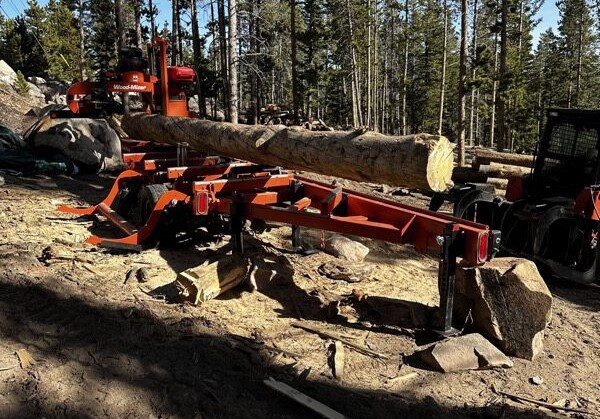
Portable sawmills deserve additional attention.
Inspect the trailer frame, hitch, axle, wheels, and stabilizing jacks for damage that may have occurred during transportation between job sites.
Structural repairs aren’t always a reason to reject a machine, but poor-quality repairs should raise questions. Fresh paint covering a repaired section may also deserve a closer inspection.
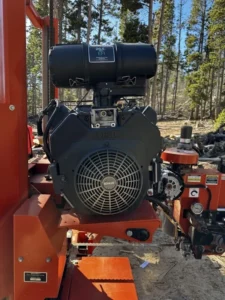
Evaluate the Engine
For many buyers, the engine is the first component they inspect—and for good reason.
Replacing or rebuilding an engine can become one of the most expensive repairs you’ll face after purchasing used equipment.
Whenever possible, inspect the engine before it has been started.
A cold start often reveals issues that may disappear once the engine reaches operating temperature.
During your inspection, pay attention to:
- Starting performance
- Idle stability
- Throttle response
- Engine vibration
- Oil leaks
- Coolant leaks
- Belt condition
- Air filter cleanliness
Listen carefully for knocking, grinding, or irregular engine sounds.
Watch the exhaust as well.
Blue smoke may indicate oil consumption.
White smoke could point to cooling system problems.
Heavy black smoke may suggest fuel system issues or incomplete combustion.
After the engine warms up, allow it to run under load if possible. A healthy engine should maintain smooth performance without excessive vibration or hesitation.
Check the Hydraulic System
Many modern sawmills rely on hydraulics to improve efficiency and reduce manual labor.
Hydraulic loaders, clamps, log turners, and toe boards help operators process larger logs with greater speed and less physical effort.
Because hydraulic repairs can be costly, this system deserves a careful inspection.
Examine:
- Hydraulic hoses
- Cylinder seals
- Pumps
- Control valves
- Fluid reservoir
- Hose fittings
- Hydraulic cylinders
Look for damp areas, fluid leaks, cracked hoses, or damaged fittings.
Then operate every hydraulic function individually.
Movement should feel smooth, controlled, and consistent. Jerky movement, delayed response, or unusual pump noise may indicate worn components or internal pressure problems.
Even small hydraulic leaks can become larger—and more expensive—if ignored.
Inspect the Blade Assembly
No component influences lumber quality more directly than the blade system.
Even if the engine performs well, poor blade alignment or worn guide components can reduce cutting accuracy and increase waste.
Begin by inspecting:
- Blade wheels
- Blade guides
- Guide bearings
- Blade tension system
- Blade tracking
- Lubrication system
Normal blade wear is expected on used equipment.
However, uneven wear patterns often indicate alignment issues or worn guide components that should be investigated further.
Ask the seller how frequently blades were sharpened or replaced.
Consistent blade maintenance is often a good indicator that the machine has been serviced properly throughout its life.
A Quick Inspection Can Save Thousands Later
One of the most common mistakes buyers make is assuming that a machine in good cosmetic condition is mechanically sound.
Unfortunately, appearances can be misleading.
A careful inspection of the frame, engine, hydraulics, and blade system provides a much clearer picture of how the equipment has been maintained and what you can realistically expect after purchase.
Spending extra time during the inspection process is almost always less expensive than dealing with unexpected repairs after the equipment arrives at your operation.
Inspect the Rails and Carriage System
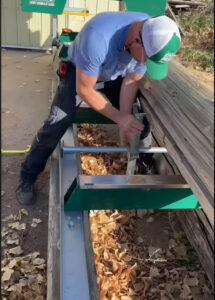
The rail system determines how accurately the saw head travels along the log. Even a slight misalignment can affect board thickness, create uneven cuts, and increase blade wear over time.
Unfortunately, rail problems are often overlooked because they aren’t always obvious during a quick inspection.
Walk the full length of the rails and look for:
- Bent or twisted sections
- Loose mounting hardware
- Uneven rail height
- Rust around support brackets
- Damaged cross members
Next, move the saw head from one end of the track to the other.
It should travel smoothly without sticking, excessive vibration, or unusual resistance. If the carriage feels rough or inconsistent, the rails may need adjustment or repair.
Well-aligned rails are essential for producing straight, consistent lumber.
Examine Bearings, Rollers, and Moving Parts
Every sawmill contains dozens of moving components that rely on bearings for smooth operation.
Although bearings naturally wear over time, excessive wear can affect cutting accuracy, increase vibration, and place additional stress on other mechanical parts.
Inspect the bearings found in:
- Blade guide assemblies
- Blade wheels
- Drive shafts
- Feed rollers
- Conveyor systems
- Carriage wheels
Rotate accessible components by hand whenever possible.
Listen for grinding noises and feel for rough movement or excessive play.
Replacing a few worn bearings is normal on older equipment. However, widespread bearing wear may indicate that routine maintenance has been neglected.
Check Belts, Pulleys, and Drive Components
Power must move efficiently from the engine to the blade.
That’s why it’s important to inspect every belt and pulley before purchasing used equipment.
Look for:
- Cracked belts
- Frayed edges
- Loose tension
- Worn pulleys
- Oil contamination
- Signs of slipping
A damaged drive system can reduce cutting performance and eventually lead to unexpected downtime.
Fortunately, these components are relatively easy to inspect and often reveal how well the machine has been maintained.
Don’t Ignore the Electrical System
Today’s sawmills often include electrical controls that manage engine functions, lighting, safety switches, and hydraulic systems.
Electrical problems may not stop a machine from running immediately, but they can create frustrating reliability issues later.
Inspect:
- Wiring harnesses
- Battery condition
- Fuse panels
- Control switches
- Safety sensors
- Electrical connectors
- Dashboard displays
Look for damaged insulation, exposed wires, corrosion, or temporary repairs using electrical tape.
If the sawmill includes digital controls, verify that every display and function operates correctly before finalizing the purchase.
Review the Hour Meter—But Don’t Depend on It
Many buyers focus heavily on engine hours.
While the hour meter provides useful information, it should never be the only factor influencing your decision.
A sawmill with 4,000 hours that has received consistent maintenance may be in far better condition than a neglected machine showing only 1,500 hours.
Instead of asking, “How many hours does it have?” ask a better question:
“How well has this machine been maintained during those hours?”
Compare the hour meter with:
- Engine condition
- Blade system wear
- Hydraulic performance
- Control wear
- Service records
- Overall cleanliness
These details provide a much more accurate picture of the equipment’s history.
Ask to See Maintenance Records
Maintenance records can reveal more about a sawmill than almost anything else.
They show whether routine servicing has been completed and whether major components have already been repaired or replaced.
Request documentation for:
- Engine oil changes
- Hydraulic fluid service
- Coolant replacement
- Bearing replacement
- Belt replacement
- Blade maintenance
- Major repairs
- Scheduled inspections
Complete records aren’t always available, especially for older equipment.
However, sellers who can explain the maintenance history in detail often inspire greater confidence than those who know very little about the machine they’re selling.
Watch the Machine Perform a Test Cut
Pictures can show appearance.
A test cut shows performance.
Whenever possible, ask the seller to cut a log while you observe.
Pay close attention to:
- Engine power under load
- Blade stability
- Feed speed
- Vibration
- Hydraulic responsiveness
- Finished board quality
Watch the finished lumber closely.
Boards should have a consistent thickness with smooth surfaces and straight edges.
If the blade wanders or the cuts appear uneven, additional inspection may be necessary.
A successful test cut provides one of the clearest indicators of a machine’s overall condition.
Questions Every Buyer Should Ask
A visual inspection tells only part of the story.
The seller’s answers often reveal just as much about the equipment.
Consider asking:
- Why are you selling the sawmill?
- How long have you owned it?
- What type of logs has it processed most often?
- Has it been stored indoors or outdoors?
- Have any major components been replaced?
- Are replacement parts still readily available?
- Has the frame ever been repaired?
- Have there been any recent mechanical problems?
- Do you have service or maintenance records?
- Is there anything that currently doesn’t work as expected?
Honest, knowledgeable sellers usually answer these questions openly and provide additional details when asked.
Warning Signs You Should Never Ignore
Not every used sawmill is worth buying.
Some issues are minor and relatively inexpensive to repair. Others can quickly turn an affordable purchase into an expensive project.
Be cautious if you notice:
- Heavy structural rust
- Cracked or poorly repaired welds
- Hydraulic leaks throughout the machine
- Excessive engine smoke
- Bent rails
- Severe vibration during operation
- Missing safety guards
- Missing serial numbers
- Poor-quality modifications
- Sellers unwilling to demonstrate the equipment
Sometimes the smartest buying decision is knowing when to walk away.
If a machine raises multiple concerns, continue comparing other options rather than rushing into a purchase.
Common Mistakes to Avoid When Buying Used Sawmill Equipment
Even experienced buyers can overlook important details when inspecting used equipment. A low asking price or a freshly painted machine can make a listing seem attractive, but cosmetic improvements don’t always reflect the machine’s true condition.
Here are some of the most common mistakes buyers make—and how to avoid them.
Focusing Only on the Price
Price is important, but it shouldn’t be the deciding factor.
A sawmill that costs less today could require significant repairs tomorrow, increasing the total cost of ownership. Instead of looking only at the purchase price, consider the equipment’s condition, maintenance history, remaining service life, and potential repair costs.
A well-maintained machine often provides better long-term value than a cheaper machine with hidden mechanical issues.
Skipping the Test Cut
One of the biggest mistakes buyers make is purchasing equipment without seeing it operate.
A test cut allows you to evaluate blade tracking, engine performance, hydraulic response, vibration, and lumber quality under real working conditions.
If a seller refuses to demonstrate the equipment, ask why.
While there may be legitimate reasons, it’s usually wise to proceed with caution.
Ignoring Maintenance History
Maintenance records provide valuable insight into how the equipment has been cared for throughout its life.
Regular oil changes, hydraulic servicing, blade maintenance, and scheduled inspections often indicate responsible ownership.
If documentation isn’t available, ask detailed questions about the machine’s service history and recent repairs.
Buying More Capacity Than You Need
It’s easy to assume that a larger or more powerful sawmill is always the better choice.
However, purchasing equipment that exceeds your production needs can lead to higher operating costs, increased maintenance, and unnecessary fuel consumption.
Choose equipment that fits your current operation while leaving room for future growth.
Why Buyers Trust LumbermensCo
Finding quality used sawmill equipment shouldn’t require searching dozens of websites or wondering whether a listing is legitimate.
LumbermensCo is built specifically for the forestry, logging, and wood products industry, making it easier for buyers and sellers to connect in one dedicated marketplace.
Whether you’re looking for a portable band sawmill, hydraulic sawmill, edger, resaw, conveyors, log handling equipment, or complete sawmill systems, you’ll find listings from sellers who understand the industry.
If you’re ready to compare available machines, explore our Sawmill Equipment for Sale to browse equipment from trusted sellers across North America.
Frequently Asked Questions
How do I know if a used sawmill is worth buying?
A quality used sawmill should have a solid frame, a healthy engine, properly functioning hydraulics, smooth blade operation, and evidence of regular maintenance. Whenever possible, inspect the machine in person and request a test cut before making your decision.
What is the first thing I should inspect?
Start with the overall condition of the machine. Then move on to the frame, engine, hydraulic system, rails, blade assembly, and maintenance records.
Are engine hours the best indicator of condition?
No. Engine hours only tell part of the story. A well-maintained machine with higher hours may be a better investment than a neglected machine with fewer hours.
Should I inspect the blade system?
Absolutely. Blade guides, wheels, bearings, tracking, and tension all affect cutting accuracy and overall productivity.
Why are maintenance records important?
Maintenance records help verify that the equipment has been serviced regularly and can provide insight into previous repairs or replaced components.
Can hydraulic problems become expensive?
Yes. Hydraulic pumps, cylinders, hoses, and control valves can be costly to repair or replace, making them one of the most important systems to inspect.
Is surface rust a serious problem?
Not always. Light surface rust is common on older equipment. However, heavy corrosion around structural components or welded joints may indicate more significant issues.
Should I bring a mechanic to inspect the equipment?
If you’re unfamiliar with sawmill machinery, hiring an experienced mechanic or equipment technician can be a worthwhile investment before purchasing.
Where can I compare used sawmill equipment?
Specialized marketplaces like LumbermensCo make it easier to compare machines, review specifications, and connect with experienced sellers across the forestry industry.
What’s the biggest red flag when buying used equipment?
Structural damage, excessive engine smoke, severe hydraulic leaks, poorly repaired welds, and sellers unwilling to demonstrate the machine are all signs that deserve careful consideration.
Final Thoughts
Buying used sawmill equipment is more than finding a machine that fits your budget—it’s about choosing equipment that will continue delivering reliable performance long after the purchase is complete.
A careful inspection gives you a clearer understanding of the machine’s condition, helps you identify potential repair costs, and allows you to make a more informed decision. Taking the time to inspect key components today can help reduce unexpected downtime and protect your investment in the future.
Whether you’re expanding a commercial sawmill, upgrading aging equipment, or purchasing your first portable mill, comparing multiple machines and asking the right questions will help you buy with greater confidence.
At LumbermensCo, we’re committed to helping buyers find quality forestry and sawmill equipment through a marketplace built specifically for the industry. By connecting buyers with trusted sellers across North America, we make it easier to compare listings, evaluate equipment, and find machinery that supports your operation for years to come.
Sources
-
Sources
- United States Department of Agriculture. Forest Products Laboratory. Wood Handbook: Wood as an Engineering Material.
- United States Forest Service. Forest Operations and Timber Harvesting Resources.
- National Hardwood Lumber Association. Official Rules for the Measurement and Inspection of Hardwood Lumber.
- Forest Products Society. Research publications on sawmill operations, lumber manufacturing, and equipment maintenance.
- International Wood Products Association. Industry insights and wood products resources.
- Occupational Safety and Health Administration. Safety guidance for woodworking and sawmill operations.
- American Society of Agricultural and Biological Engineers. Engineering standards for forestry and agricultural equipment.
Disclaimer
This article is intended for educational and informational purposes only. Equipment condition, pricing, specifications, and availability may vary depending on the manufacturer, maintenance history, and seller. Always inspect used equipment carefully and verify all information before completing a purchase.