Ask any experienced sawyer what actually determines the quality of their lumber, and most won’t say the mill itself. They’ll say the blade. A sharp, properly set blade cuts clean, straight, and efficiently. A dull or damaged one wastes wood, strains the motor, and quietly eats into your profit on every single log.
Maybe you’re trying to figure out which blade type fits your mill. Maybe you want to keep one sharp longer, or you’re not sure when it’s time to retire one. This guide walks through it in the order those questions usually come up.
Why Blade Choice and Condition Matter So Much
It’s easy to think of a sawmill blade as a simple, interchangeable part. In practice, it’s the single component that most directly affects both your lumber yield and your operating cost.
Kerf is a good example of why this matters. Kerf is the width of material a blade removes with every pass. A typical band saw blade cuts a kerf of roughly 1/32 inch. A conventional circular blade cuts closer to 1/4 inch. That difference sounds small, but it adds up fast. It can increase usable lumber yield from the same log by around 20%. Multiply that across a season of milling, and blade choice alone can separate a profitable operation from one quietly bleeding value into sawdust.
The U.S. Forest Service has studied this exact effect. Their research on thin-kerf sawing found that saw kerf directly impacts lumber recovery. Switching to a thinner-kerf band saw can improve recovery efficiency by around 10% compared to wider-kerf alternatives. For a small mill running on tight margins, that’s not a minor detail. It’s often what determines whether smaller or lower-value logs are worth milling at all.
So before getting into sharpening schedules or replacement timing, it helps to understand the blade types you’re actually choosing between.
Types of Sawmill Blades
Band saw blades are the standard on most portable and mid-size mills today. They’re thin, flexible loops of steel with teeth along one edge, running continuously around two wheels. Their narrow kerf means less wasted wood per cut. They’re also generally quieter and safer to operate than circular alternatives.
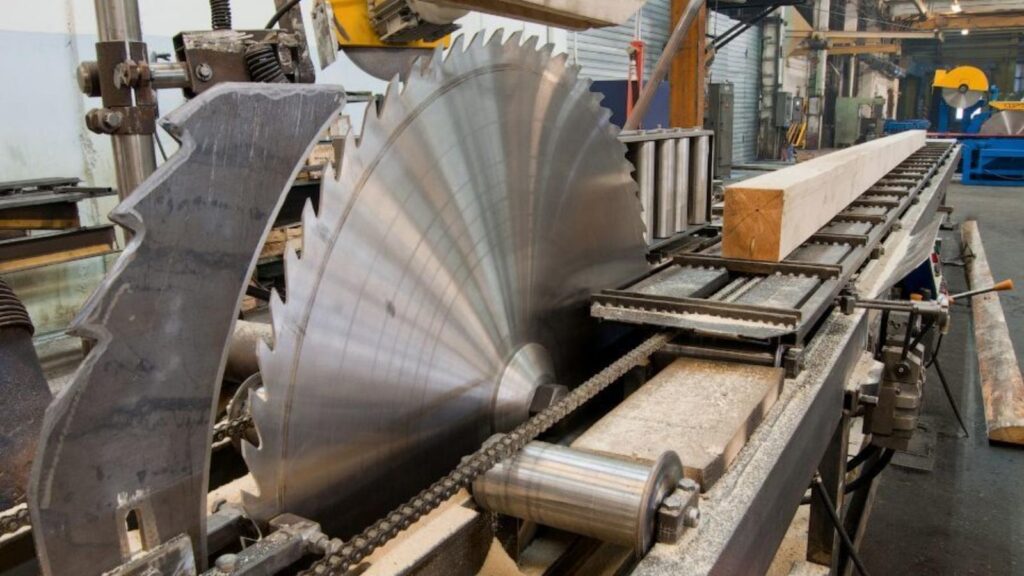
Circular saw blades are the older, heavier-duty option, still common on some industrial and older mills. They cut faster in certain conditions. But they remove more material per pass, which lowers total lumber yield from each log.
Swing blade sawmills use a different cutting geometry entirely. A rotating blade swings through the log rather than making a fixed vertical or horizontal pass. These are popular with smaller, highly portable setups where flexibility matters more than raw throughput.
Within band blades specifically, tooth pattern matters too. A common configuration uses a repeating three-tooth set: two teeth angled left and right, plus a third straight “raker” tooth that clears the cut. This pattern balances cutting speed with a clean, controlled kerf. It’s the standard most manufacturers build around.
💡 Pro Tip Match your blade width and tooth pattern to your horsepower and wood type, not just what’s cheapest. A blade built for softwood on a hardwood-heavy operation will dull far faster than expected.
Once you’ve got the right blade type running, the next question is almost always the same one. How do you keep it cutting well for as long as possible?
Signs Your Sawmill Blade Is Getting Dull
A dulling blade rarely announces itself all at once. It shows up gradually, in ways that are easy to blame on something else first.
Watch for:
- Rougher cut surfaces than the same blade produced a few days earlier
- Increased feed resistance — the mill working harder to push through the same wood
- Wandering or wavy cuts, where the blade drifts off a straight line
- Burning or discoloration on the cut surface, from friction instead of clean cutting
- Louder or different-sounding operation, since a dull blade fights the wood instead of slicing through it
None of these alone guarantees a dull blade. Feed rate, wood species, and moisture content all affect cut quality too. But when several show up together, blade condition is almost always the first thing worth checking.
This is also where a properly maintained blade and a properly maintained machine start to overlap. A well-serviced mill — tracked and tensioned correctly, guides aligned — lets a blade cut cleanly for longer before these symptoms show up at all. Our sawmill maintenance checklist covers the routine upkeep that keeps both the machine and the blade performing as they should.
Once you’ve confirmed the blade is the problem, the next decision is whether to sharpen it or set it aside.
Sharpening Sawmill Blades
Sharpening extends a blade’s useful life significantly. For most operators, it’s cheaper than constant replacement — provided the blade’s core structure is still sound.
DIY sharpening is realistic for smaller operations running band blades, using a dedicated sawmill blade sharpener. These machines profile each tooth to a consistent angle and depth. That consistency matters more than most new operators expect. Uneven sharpening between teeth creates uneven cutting pressure and a rougher finish, even on a blade that’s technically “sharp.”
Professional sharpening services make more sense for larger volumes. The same goes for circular and carbide-tipped blades, which need more specialized equipment to sharpen correctly without damaging the tooth geometry.
A few sharpening basics worth following either way:
- Sharpen on a consistent schedule tied to hours of use, not just when cuts start looking rough
- Keep tooth angle and depth uniform across every tooth on the blade
- Clean pitch and resin buildup from the blade before sharpening, since buildup affects how evenly the grinder contacts each tooth
- Inspect for cracks or tooth damage during every sharpening pass, not just at a full inspection
⚠️ Safety Reminder Always follow lockout procedures before removing a blade for sharpening. A blade coming off a machine that isn’t fully de-energized is one of the more preventable ways operators get hurt.
Sharpening only works if the blade underneath the edge is still structurally sound. Every blade eventually reaches a point where sharpening stops being the answer.
Blade Guides and Tension: The Overlooked Half of Blade Life
Sharpening gets most of the attention, but a blade running through misaligned guides or the wrong tension wears out fast regardless of how sharp it is.
Blade guides keep the blade tracking straight through the cut. Worn or misaligned guides let the blade twist slightly on every pass, which accelerates wear on the teeth and the blade body alike. Check guide wheels and bearings on the same schedule you check the blade itself.
Tension affects both cut accuracy and blade life. Too little tension lets the blade flex and wander. Too much stresses the metal and shortens its working life, especially around the gullets where cracks tend to start. Most manufacturers specify a tension range for each blade width — sticking to it matters more than guessing based on feel.
A blade replaced on schedule but run through poorly maintained guides will still underperform. Treating guides and tension as part of blade care, not a separate maintenance task, is what actually extends the number of cuts you get per blade.
When to Replace a Sawmill Blade
Wear from regular use is a normal part of a band blade’s working life. It’s under real physical load on every pass. But certain signs mean it’s time to retire the blade rather than sharpen it again.
Replace a blade when you see:
- Visible cracks in the gullet — the curved area between teeth — which signal metal fatigue and real risk of failure under load
- Broken or missing teeth, often caused by striking a foreign object like a rock, nail, or embedded metal in the log
- Excessive stretching or wear in the blade body, beyond what proper tensioning can compensate for
- Repeated tracking problems that persist even after guides and tension are correctly adjusted
A blade with visible metal fatigue isn’t just a quality problem. It’s a safety one too. A blade that fails under load, especially at operating speed, is a genuine hazard to anyone standing near the machine. Our sawmill safety guide covers this in more depth. The short version: a dull or damaged blade increases both kickback risk and the odds of the blade itself failing mid-cut.
At this point, the question shifts from “can this blade be saved” to “what should replace it.”
Choosing a Replacement Blade
When it’s time to buy new blades, a few factors matter more than price alone.
Blade material affects both cutting performance and how often you’ll be back at the sharpener. Standard carbon steel blades are the most common and affordable option, sharpened as needed. Carbide-tipped blades cost more upfront, but they hold an edge dramatically longer — worth considering for high-volume operations or particularly abrasive wood.
Width and thickness need to match your specific mill and horsepower. A blade too thin for your engine flexes and wanders. One too thick wastes power and adds unnecessary kerf loss.
Tooth pattern should match the wood you’re cutting most often. Denser hardwoods generally call for a lower hook angle than softer, fibrous woods.
When it’s time to replace a worn blade, working with a trusted blade supplier that stocks the exact tooth pattern and gauge for your mill beats guessing on specs or settling for whatever’s on the shelf.
If you’re also evaluating whether your current mill setup even fits your blade needs, browsing reliable sawmill equipment can help you compare machines built around the blade type and capacity you actually need.
What Do Replacement Blades Typically Cost?
Pricing varies by blade length, width, material, and tooth pattern, but a rough range helps with budgeting.
Standard carbon steel band blades for portable mills typically run somewhere in the range of $15 to $40 per blade, depending on length and supplier. Carbide-tipped blades cost considerably more upfront — often several times the price of a standard blade — but they can last many times longer between sharpenings, which narrows the real cost gap for high-volume operations.
Circular blades vary more widely by diameter and tooth count, and are usually a larger single purchase than band blades, offset by a longer working life before replacement is needed.
Buying a small stock of spares rather than a single blade at a time also avoids downtime waiting on a replacement when one fails mid-job.
Common Sawmill Blade Mistakes to Avoid
A handful of avoidable habits account for most premature blade failures:
- Running a blade well past its dull point, which strains the motor and wears guides and bearings, not just the blade itself
- Skipping blade cleaning before sharpening, leading to inconsistent tooth profiles
- Ignoring gullet cracks because “it’s still cutting fine,” until the blade fails outright
- Mismatching blade type to wood species, which accelerates dulling regardless of maintenance
- Storing blades improperly — coiled tightly or exposed to moisture — which shortens usable life before the blade even goes back on the mill
None of these require expensive fixes. They require the same thing most sawmill safety and maintenance habits do: consistency.
Frequently Asked Questions
How often should a sawmill blade be sharpened?
It depends on wood type, blade material, and hours of use. Many operators sharpen every 1 to 4 hours of active cutting for standard carbon steel band blades. Denser or dirtier wood shortens that interval. Carbide-tipped blades hold an edge considerably longer between sharpenings.
What’s the difference between a band saw blade and a circular saw blade?
A band saw blade is a thin, continuous loop that produces a narrow kerf. It wastes less wood per cut and generally runs quieter. A circular saw blade is a rigid disc that cuts faster in some conditions, but it removes more material per pass, lowering total lumber yield from the same log.
How do I know if my sawmill blade needs to be replaced instead of sharpened?
Visible cracks in the gullet, broken or missing teeth, and blade stretching that tensioning can’t correct are all signs a blade needs replacing. A blade that keeps mistracking even after guides and tension are properly adjusted is another strong signal.
Can I sharpen sawmill blades myself?
Yes, for most band blades. A dedicated sawmill blade sharpener makes DIY sharpening realistic for small to mid-size operations. Circular and carbide-tipped blades generally benefit from professional sharpening, since they need more specialized equipment to profile correctly.
Does blade choice really affect how much lumber I get from a log?
Yes, significantly. Kerf width alone can shift usable lumber yield noticeably. Thinner-kerf band blades commonly recover more board footage from the same log than wider-kerf circular blades, since less wood is lost to sawdust on every pass.
What is kerf on a sawmill blade?
Kerf is the width of material a blade removes as it cuts, essentially the wood turned into sawdust with each pass. A typical band saw blade has a kerf of about 1/32 inch, compared to roughly 1/4 inch for a conventional circular blade — a difference that adds up to real lumber savings over time.
How long does a sawmill blade last?
It varies widely based on wood type, blade material, and how consistently it’s sharpened, but many band blades go through several sharpenings before needing replacement — often covering thousands of board feet in total. Carbide-tipped blades last considerably longer between both sharpenings and full replacement.
What causes a sawmill blade to break?
Metal fatigue from normal wear is the most common cause, usually showing up first as cracks in the gullet. Striking foreign objects in the log — rocks, embedded nails, or metal — is the other leading cause, and it can snap teeth or the blade body with little warning.
How much do sawmill blades cost?
Standard carbon steel band blades typically run around $15 to $40 each, depending on length and supplier. Carbide-tipped blades cost considerably more upfront but last far longer between sharpenings, which often narrows the real cost difference for high-volume operations.
Bringing It Together
A sawmill blade is easy to overlook until it starts costing you money — in wasted wood, strained equipment, or a cut quality your customers notice. Choose the right type for your mill and wood. Sharpen on a consistent schedule. Retire a blade the moment it shows real structural wear.
None of this needs to be complicated. It just needs to be routine, the same way blade checks belong in your regular equipment maintenance and safety practices — not treated as a separate afterthought.
For more guides like this, browse our full blog archive.
Sources
- USDA Forest Service, Northeastern Area State & Private Forestry, Thin Kerf Sawing
- OSHA, Sawmills – Overview